
Shingle Roof
Roofing for the City of Toronto, from century homes to condo-adjacent infill builds
Toronto's housing stock ranges from pre-war roofs with plank decking to brand-new infill with builder-grade shingles. We scope each differently instead of applying one template citywide.
Email Us for a Free Estimate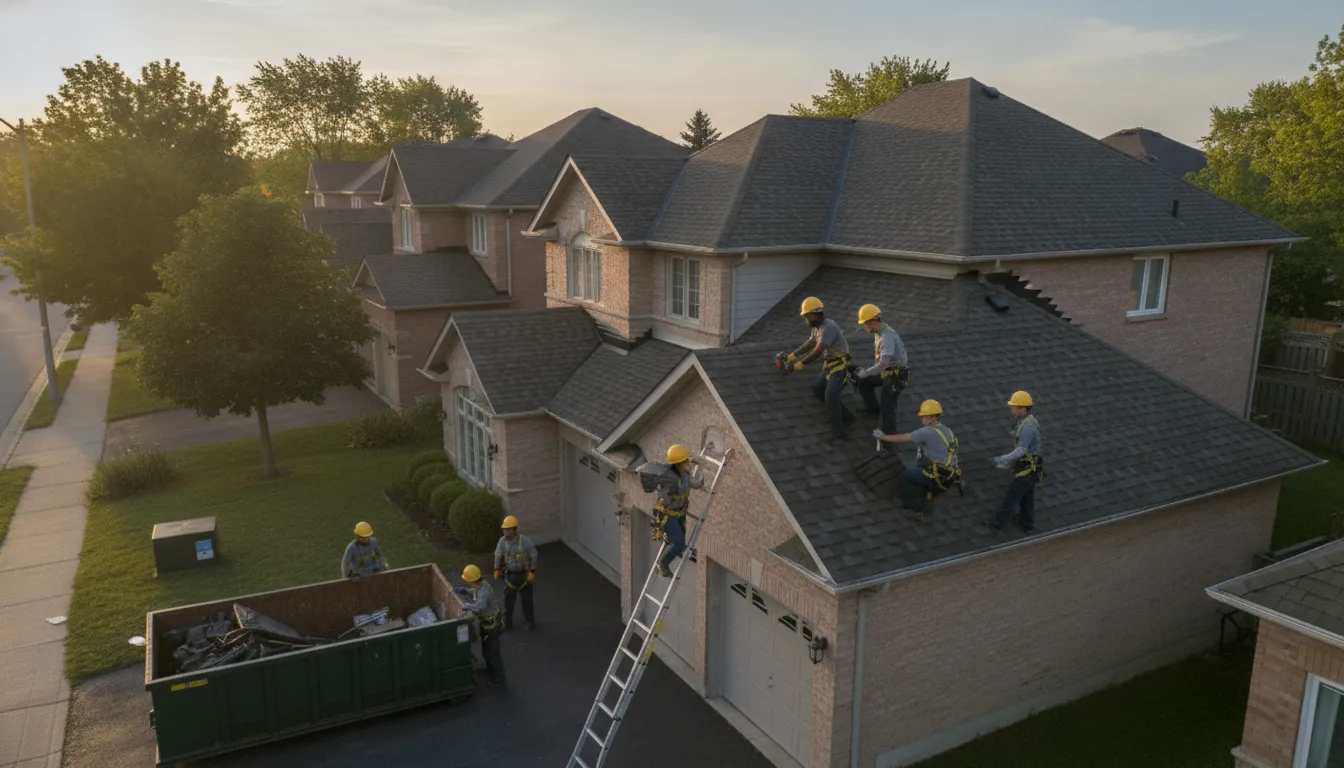
Roofing in the City of Toronto is not a one-size job
Toronto proper covers everything from the older streetcar neighbourhoods with roofs that have seen decades of freeze-thaw cycling, to newer infill and laneway builds put up fast during recent construction booms. A roofer who treats every Toronto house the same is missing what actually drives failure on each type.
Older Toronto homes often have original decking
Plank sheathing under aging shingles is common in the city's older neighbourhoods, and it behaves differently than modern OSB decking when it comes to fastening and moisture tolerance during a tear-off.
Urban tree cover means more debris and moisture retention
Mature tree canopy in established Toronto neighbourhoods drops more debris into valleys and gutters, holding moisture against the roof longer after rain or snowmelt.
Newer infill builds can have minimum-spec roofing
Fast-build infill and laneway housing sometimes went up with builder-grade shingles and minimal ventilation planning — we check ventilation balance specifically on these newer Toronto builds.
Dense lot lines affect access and disposal
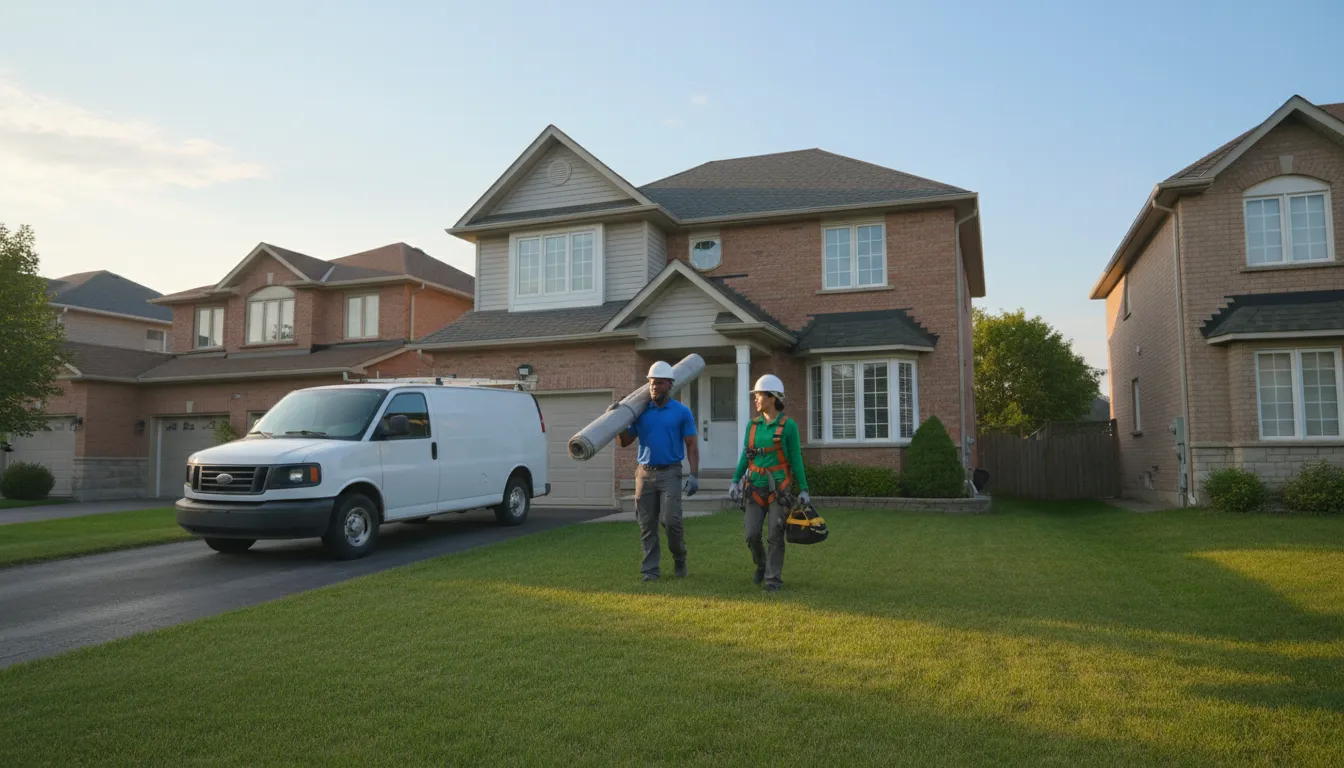
Tighter urban lots change how we stage material and dispose of tear-off debris, which we account for in scheduling rather than treating every job like a suburban driveway setup.
A generic city-wide quote misses what's different about your specific block
A roof in an older Toronto neighbourhood with original decking has different risk factors than a new infill build three streets over. Quotes that don't distinguish between the two often either overbuild the newer house's scope or underbuild the older one's — and the second mistake is the expensive one.
We scope based on your home's actual age and construction, not just its Toronto address
Whether you're in an older established neighbourhood or a newer infill build, we inspect your specific decking, ventilation, and flashing condition and quote accordingly — not a flat citywide rate that ignores what's actually on your roof.
Why Toronto homeowners choose Shingle Roof
Local enough to know the city's housing stock varies block to block.
Experience with older Toronto decking
We know how plank sheathing behaves differently than modern OSB.
Ventilation checked on newer builds
We don't assume a new roof means a well-ventilated one.
Urban access planned for
Material staging and disposal accounted for on tighter lots.
Written, itemized quotes
Scoped to your specific home, not a citywide template.
Licensed and insured
Documentation provided before any work begins.
Honest on repair vs replace
We won't push a full re-roof if a repair is the honest answer.
How we work with Toronto homeowners
From first email to finished job, adjusted for your specific home.
- 1
Email your address and neighbourhood
Tell us roughly where in the city you are and what's prompting the inquiry.
- 2
On-site inspection
We check decking, ventilation, and flashing specific to your home's age and construction.
- 3
Written quote
Scoped to what your roof actually needs, itemized so you can compare it against other quotes.
- 4
Scheduled work
Planned around access, disposal logistics, and weather.
Common roofing issues we see across Toronto
Patterns that show up repeatedly across the city's varied housing stock.
Ice damming on poorly ventilated older homes
Older attics without updated ventilation are prone to ice damming during freeze-thaw stretches.
Valley wear from tree debris
Mature tree cover in established neighbourhoods contributes to valley clogging and moisture retention.
Flashing failure at chimneys in older homes
Original chimney flashing on older Toronto houses is a frequent leak source after decades of freeze-thaw cycling.
Minimum-spec ventilation on newer infill
Some newer builds were finished with the minimum ventilation required, which can shorten shingle life.
Decking softness under original plank sheathing
Older plank decking can develop soft spots that only show up once shingles are removed.
Downspout discharge against tight urban foundations
Narrow lot spacing sometimes means downspouts discharge too close to the foundation.
Toronto roofing questions
Do you work on century homes in older Toronto neighbourhoods?
Yes, and we specifically check original decking and ventilation on older homes rather than assuming modern construction.
Can you work on narrow urban lots?
Yes, we plan material staging and debris disposal around tighter city lots as part of scheduling.
Do newer Toronto builds need roofing work already?
Some infill and laneway builds were finished with minimum-spec ventilation or builder-grade shingles, which can mean earlier attention than you'd expect from a 'new' roof.
How do I book an inspection in Toronto?
Email us your address and neighbourhood and we'll schedule a visit.
Do you handle permits for roofing work in Toronto?
We can advise on what's typically required and help coordinate documentation, though permit applications themselves are the homeowner's responsibility unless otherwise agreed.
Pick your area
Communities We Serve in City of Toronto
City of Toronto is highlighted below — every community has its own local page, and we cover the rest of the GTA too.
Get a written roofing quote for your home in City of Toronto
Email us your address and we'll schedule an inspection.
Email Us for a Free EstimateProudly Serving City of Toronto, ON
Local, on-time service throughout City of Toronto and the surrounding area.